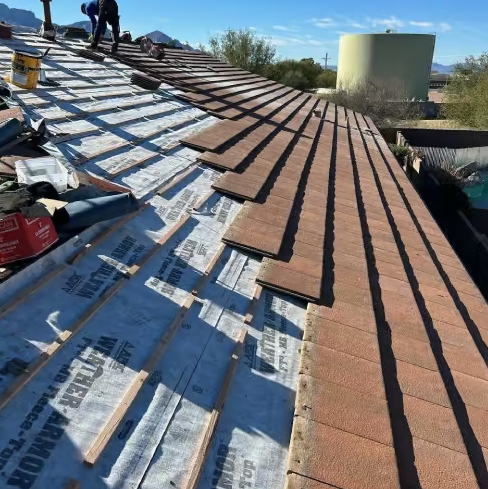
Your tile roof looked fine for twenty years. Then a July monsoon cell sat over your neighborhood for forty minutes, and now there's a brown ring on the bedroom ceiling. Most people's first thought is that the whole roof is shot and they're looking at a $40,000 bill.
Usually they're not. On most tile roofs in St. George, the tile itself is fine. What's failing is the layer underneath it, and that's a very different problem with a very different price tag. This post walks through how to tell what's actually going on, when a re-felt makes sense, when it doesn't, and the two mistakes that cost homeowners the most money every monsoon season.
Key Takeaways
- Tile outlasts the waterproofing under it. Tile can go 50+ years. Underlayment usually gives out at 20 to 30 here.
- Sound tile, failing felt? A re-felt resets the roof for roughly half the cost of new tile.
- One leak in one spot usually means a repair, not a re-felt or a new roof.
- Roof only a year or two old and leaking? Call the original installer first.
- Don't wait for monsoon season to find out, and don't sign with a door-knocker after a storm.
The Short Answer
If your tile roof is 20 to 25 years old, the tiles are in good shape, and the leak is coming from worn-out underlayment, a re-felt is almost always the smarter move. We pull the tile, replace the underlayment and flashing, and put your original tile back. You get a new waterproofing system for roughly half the cost of a full tile replacement. If you've already looked at what a full roof replacement costs in St. George, that difference is real money.
If the tiles themselves are cracking, crumbling, or discontinued with nothing left to match, or if the decking underneath has real structural damage, full replacement starts to make sense.
And if there's one leak in one spot and the rest of the underlayment is healthy, neither of those is the answer. You need a repair.
Age alone is a reason to get the roof looked at. It is not a reason to replace it.
Why Tile Roofs Leak When the Tile Looks Fine
Here's the part most homeowners never get told. Tile is not the waterproofing on a tile roof. Tile is the armor. It sheds most of the water and takes the beating from sun and hail. The actual waterproof layer is the underlayment underneath it, and that layer does the real work every time water gets past the tile, which it does on every tile roof in every storm.
Concrete and clay tile can last 50 years or more. The underlayment under it usually doesn't make it past 20 to 30 here. Southern Utah is hard on it. The UV is intense, attic-side temperatures swing hard between day and night, and that daily expand-and-contract cycle bakes the felt until it gets brittle, cracks at the fasteners, and stops sealing.
Tile vs. the Layer Underneath It
Typical service life in St. George, in years
So a 25-year-old tile roof isn't really a 25-year-old roof that needs to be thrown out. It's a 50-year roof with a 25-year waterproofing layer that has reached the end of its life.
That's why so many of the neighborhoods built in the late 1990s and 2000s are hitting this at the same time. Places like Coral Canyon, Green Springs in Washington City, Little Valley, and the bench neighborhoods in Santa Clara were built with similar tile on a similar schedule, so the underlayment is wearing out on a similar schedule too.
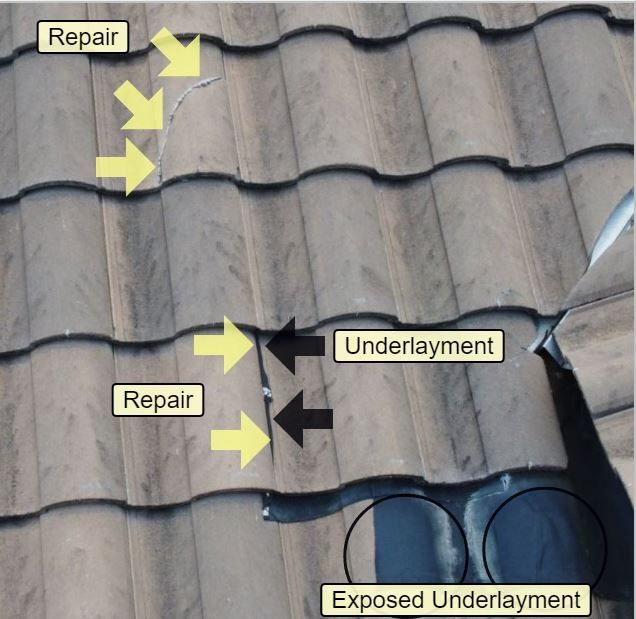
Not Every Tile Leak Means Old Underlayment
A lot of our calls lately have been leaks that showed up right after a storm. The storm gets blamed, and sometimes that's fair. But the storm is usually just what exposed a problem that was already there. Before anybody quotes you a re-felt or a new roof, they need to figure out which kind of leak you actually have.
A One-Year-Old Tile Roof That Leaked at the Valley
One of our recent calls was a newer home with a brand new concrete tile roof, about a year old. Several roof sections meet on that house, which means several valleys, and valleys are where water concentrates the most.
The underlayment wasn't old. It was barely broken in. The problem was the install. In a few spots the roof wasn't set up to direct water where it needed to go, so instead of running down the valley and off the roof, water worked its way under the valley flashing and sat there. It kept collecting in that one area, storm after storm, until it finally came through the ceiling.
The fix was local: open up the affected area, replace the soaked underlayment, redo the flashing correctly, and relay the tile. No re-felt. No new roof. Just fixing what should have been done right the first time.
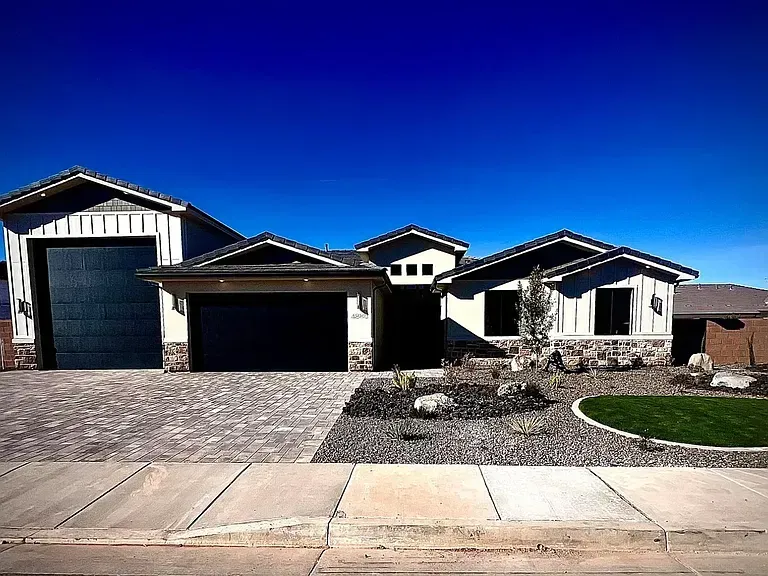
If your tile roof is only a year or two old and it's leaking, call the original installer before you call anyone else. Leaks that early are almost always workmanship, and that's what the installer's workmanship warranty is for. Get the response in writing.
The Three Kinds of Tile Roof Leaks
Type 1
Installation defects
Usually on newer roofs. Bad flashing, poor valley detail, water being directed the wrong way. The materials are new; the work wasn't right.
Fix: installer warranty or a targeted repair
Type 2
A single failure point
A cracked or slipped tile, a split pipe boot, flashing pulled loose at a wall or chimney. The rest of the roof is healthy.
Fix: a repair
Type 3
Worn-out underlayment
Leaks in more than one spot, or a patched leak that comes back somewhere new. Felt is brittle and crumbling on every slope.
Fix: a re-felt
The only way to know which one you have is to lift tiles and look. You cannot diagnose underlayment from the driveway, and you can't diagnose it from a drone photo either.
When a Re-Felt Is the Smart Money
A re-felt is sometimes called a lift and relay. We take the tile off, replace the underlayment, renew flashing where it's needed, fix any bad decking we find, and reinstall your original tile. Here's how it stacks up against tearing everything off:
Re-Felt (Lift and Relay)
About $10,000 to $20,000+
- Your original tile goes back on
- New underlayment, flashing renewed as needed
- Looks the same afterward, easy HOA approval
- Best when the tile is still solid
Full Tile Replacement
About $20,000 to $40,000+
- All new tile
- New underlayment, flashing renewed as needed
- New color or profile possible, with HOA approval
- Best when the tile is failing or can't be matched
It's the move we lean toward when:
- The tiles are still solid, with no widespread cracking, flaking, or crumbling
- The decking is sound, aside from a few sheets we can swap out during the job
- The real problem is aging underlayment, not the tile
- Matching replacement tile is available, because some breakage during removal is normal on every job
- You plan to stay in the house or want another 20 to 30 years out of the roof
For a typical 2000s Coral Canyon home with its original concrete tile in good shape, a re-felt is about as good a roofing investment as you can make. The house looks exactly the same afterward, which keeps the HOA happy, and you've reset the clock on the part that actually fails.
Tile matching matters more than most people think. Some of the profiles and colors used in these neighborhoods 20 years ago are no longer made. A good roofer will check availability with manufacturers like Eagle Roofing Products and Westlake Royal before the job starts, not halfway through it.
When You Should Replace the Whole Tile Roof
A re-felt only works if the tile is worth putting back. We'll recommend a full replacement when:
- A large share of the tiles are cracked, brittle, or breaking as soon as they're handled
- The profile is discontinued and there isn't enough salvageable tile to finish the job
- There's widespread decking rot, sagging, or structural damage
- The cost of carefully removing and reinstalling old tile is getting close to the cost of new tile
- You want a different color, profile, or material, which will also need HOA approval in most of these communities
Older Green Springs roofs with a lot of breakage or an obsolete tile profile are where we see this most. In those cases it's worth getting a written comparison of both options side by side.
What a Re-Felt Costs Compared to Full Replacement
These are typical ranges for a residential tile roof in the St. George area, not a quote for your house. Size, pitch, number of valleys, tile breakage, and decking condition all move the number.
Typical Tile Roof Costs in St. George
Market ranges, not quotes
| Job | Typical Range | When It's the Answer |
|---|---|---|
| Single tile repair or swap | $300 to $1,200 | One cracked or slipped tile |
| Flashing rebuild | $600 to $2,500 | Leak at a wall, chimney, or penetration |
| Valley repair | $1,000 to $4,000 | Water getting under valley flashing |
| Tile re-felt | $10,000 to $20,000+ | Sound tile, failing underlayment |
| Full tile replacement | $20,000 to $40,000+ | Failing, discontinued, or unsalvageable tile |
Typical Washington County market ranges for single-family homes. Every real number starts with a measured, photographed inspection.
For a deeper breakdown of what drives roofing prices here, including per-square pricing for every roof type, see our guide to roof replacement costs in St. George.
The Biggest Mistake: Waiting for the Monsoon to Tell You
If you know your tile roof is in that 20 to 25 year range, the worst time to find out the underlayment is done is during a July storm.
Here's why. When monsoon season hits, every roofer in Washington County gets slammed at once. Phones ring all day, schedules fill up for weeks, and the homeowners who called first get seen first. If your ceiling starts dripping in the middle of that rush, you might wait a lot longer than you'd like for someone to get on your roof. Meanwhile, water is sitting in your attic insulation and soaking into your decking, and a re-felt with a few bad sheets of plywood can turn into a re-felt with a lot of bad sheets of plywood.
The fix is simple. Get tile roofs over 20 years old inspected in the off-season, ideally fall or spring, so if work is needed it gets done on your schedule, at normal pricing, before the next monsoon.
The Second Mistake: Signing With a Door-Knocker After a Storm
After every big storm, out-of-town crews roll into St. George, knock on doors, and promise new roofs paid for by insurance. Some of them do decent work. Plenty of them don't. And almost all of them have the same problem: they're gone when the storm season ends.
That matters more on tile than on almost any other roof. Tile work is detail work. The valleys, flashing, and water paths have to be right, and when they're not, you find out months later, the way the homeowner in the story above did. If the crew that did your roof has left the state, getting them back to honor a workmanship warranty is a nightmare. Phone numbers stop working. The company name changes. You end up paying someone else to fix it.
There's also the insurance problem. Homeowners insurance is generally written to cover sudden damage, like a tile broken by hail or flashing torn loose by wind. Underlayment that wore out from 25 years of sun is wear and tear. A storm chaser who tells you insurance will cover a worn-out roof is setting you up for a denied claim, or worse, pushing you to sign something that hands your claim over to them. Our storm damage page covers how to tell the difference.
Before you sign with anyone, after a storm or not:
- Look up their contractor license on the Utah Division of Professional Licensing (DOPL) website
- Ask for a local address and how long they've worked in Washington County
- Get the workmanship warranty in writing and ask who honors it if the company closes
- Don't sign anything the same day, especially anything that involves your insurance claim
What a Real Tile Roof Inspection Should Look Like
If someone tells you that you need a re-felt or a new roof without lifting a single tile, get a second opinion from a local St. George roofer. A proper tile inspection should include:
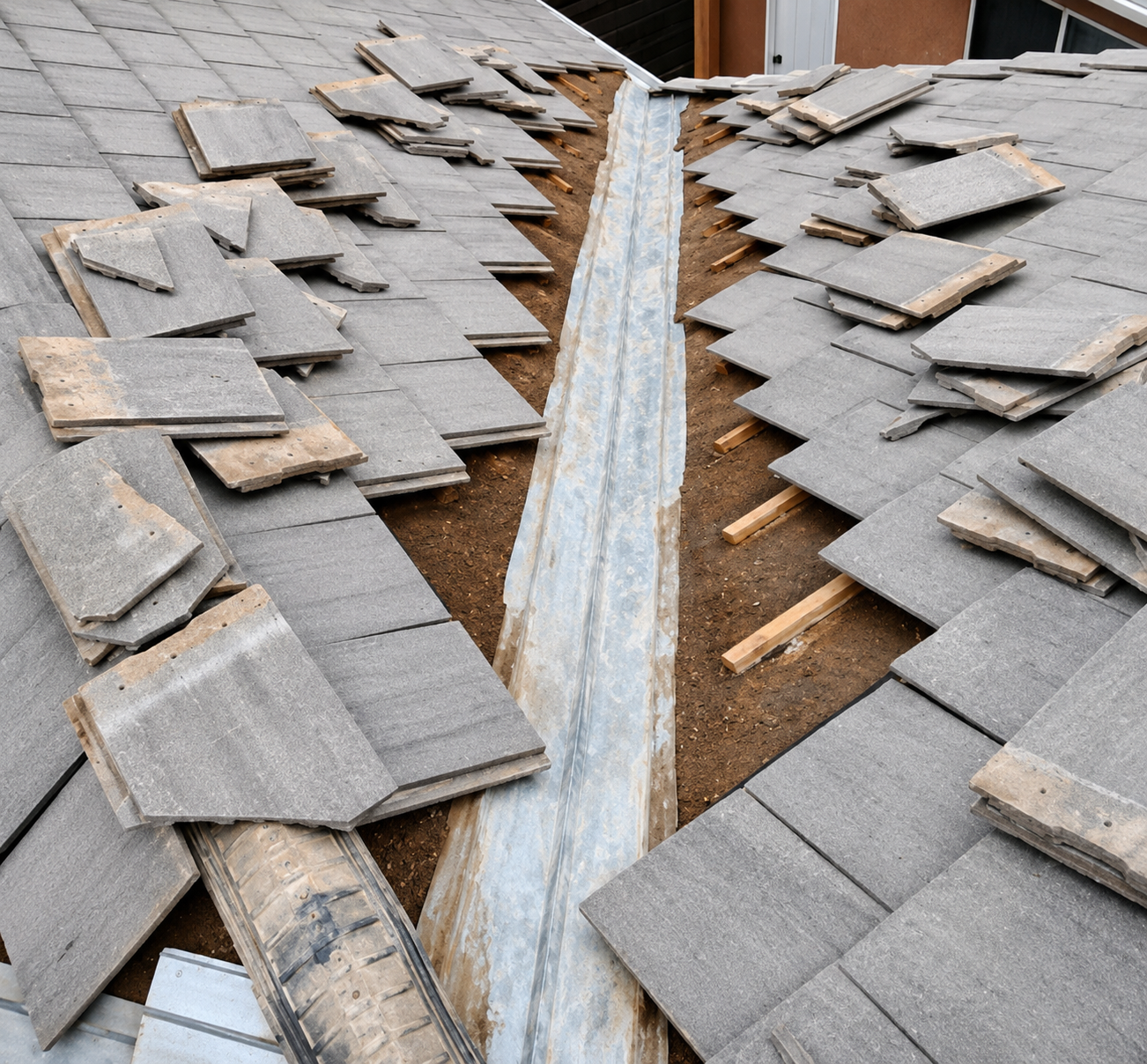
- Lifting representative tiles on several different slopes, not just one
- Photos of the underlayment, flashing, battens, and decking, which you should get to keep
- A close look at valleys, wall flashing, and roof penetrations, since that's where most leaks start
- An honest call on whether you're looking at a repair, a re-felt, or a replacement
And when you get the estimate, ask for:
- The exact underlayment product being installed and its warranty
- How tile breakage is handled and what's included in the price
- Whether matching replacement tile has been confirmed as available
- A written comparison of the re-felt scope and the full replacement scope, if both are on the table
That last one tells you a lot about a roofer. Someone who's willing to show you the cheaper option next to the expensive one is someone who's trying to solve your problem, not just close a bigger sale.
Frequently Asked Questions
How long does a re-felt last?
Done right with quality underlayment, a re-felt typically resets the clock for another 25 to 30 years. Since the tile can outlast that, a lot of homes only need one re-felt in their lifetime.
Will a re-felt change how my roof looks?
Barely, if at all. Your original tile goes back on. A few broken tiles get replaced with matching ones. That's why re-felts are usually an easy approval in HOA communities.
Will homeowners insurance pay for a re-felt?
Generally not, if the underlayment simply wore out with age. Insurance may cover specific storm damage, like hail-broken tile or wind-lifted flashing, but not the cost of replacing underlayment that reached the end of its life. Get the storm damage documented with photos and talk to your insurer directly before you sign anything with a contractor.
Can I just patch the leak and wait?
If the leak is a single failure point and the rest of the underlayment is healthy, yes, a repair is the right call. If the underlayment is failing across the whole roof, patching one spot just moves the next leak somewhere else. That's the pattern to watch for: a leak gets fixed and a new one shows up a few feet away the next storm.
My tile roof is brand new and leaking. What do I do?
Call the original installer first and ask about the workmanship warranty. A leak on a one- or two-year-old tile roof almost always points to how it was installed, not the materials.
Get Your Tile Roof Checked Before Next Monsoon Season
Built in the late 1990s or 2000s with its original tile? Red Rock Roofing offers free tile roof inspections across St. George, Washington City, Santa Clara, Ivins, Hurricane, and Coral Canyon. We lift tiles, take timestamped photos, and give you a written, line-item estimate you keep either way. If a repair will do the job, we'll tell you.
Schedule My Free Inspection Call 435-222-7141